
Teaching place value effectively means helping students understand that a digit’s position determines its value, and the best way to do that is through a hands-on, gradual progression from concrete manipulatives to abstract representation. Start weeks before your formal lessons by practicing counting by tens past 100, then move through a structured sequence using base-ten blocks, place value charts, and finally written numerals. This foundational skill typically begins in kindergarten and first grade, though it’s deepened throughout elementary school, and getting it right matters because place value is the cornerstone of all whole-number understanding.
Most students struggle with place value because they’re rushed into written notation before they truly grasp what those columns mean. The fix is building conceptual understanding first. When children can physically bundle ten unit cubes into a rod and see that ten rods make a flat of 100, the abstraction starts to click. You’re not just teaching them to write 234, you’re helping them see that number as 2 hundreds, 3 tens, and 4 ones.
Parents and teachers searching for place value guidance usually need a clear roadmap, not another theory lesson. The good news is that with the right materials (base-ten blocks, chart paper, counters) and a patient sequence, nearly every child can master this concept. Programs like Math Mammoth Light Blue series offer strong place value instruction, and for Canadian educators, Pearson Mathology workbooks align with provincial curricula. The key is giving students time to explore, make mistakes, and discover patterns before expecting fluency with written numbers.
Why Place Value Matters in Early Math Education
Place value is the secret decoder ring that unlocks the entire number system for young learners. Without it, numbers are just random symbols on a page. With it, children understand that 23 means two tens and three ones, and suddenly numbers have structure, logic, and meaning. This foundational concept is what allows kids to move beyond counting by ones and start thinking mathematically about how numbers work together.
When children grasp place value in kindergarten and first grade, they’re not just learning to read numbers, they’re building the mental framework they’ll use for every math operation they encounter. Addition becomes easier because they can add tens to tens and ones to ones. Subtraction makes sense because they understand what it means to regroup. Multiplication and division build directly on these same grouping principles. Research shows that activities designed to build place value conceptual understanding strengthen the whole-number comprehension students need for future success.
The real-world connections are everywhere. When your child counts money, they’re using place value, ten pennies equals one dime, ten dimes equals one dollar. When they read a thermometer showing 85 degrees, they understand that’s eight tens plus five ones. When they measure 24 inches for a craft project, they know that’s two groups of ten plus four more. These daily encounters reinforce the idea that place value isn’t abstract school math; it’s how the world organizes quantity. Children who develop this understanding early approach numbers with confidence rather than confusion, setting themselves up for years of math success.
What You’ll Need: Tools and Materials for Teaching Place Value
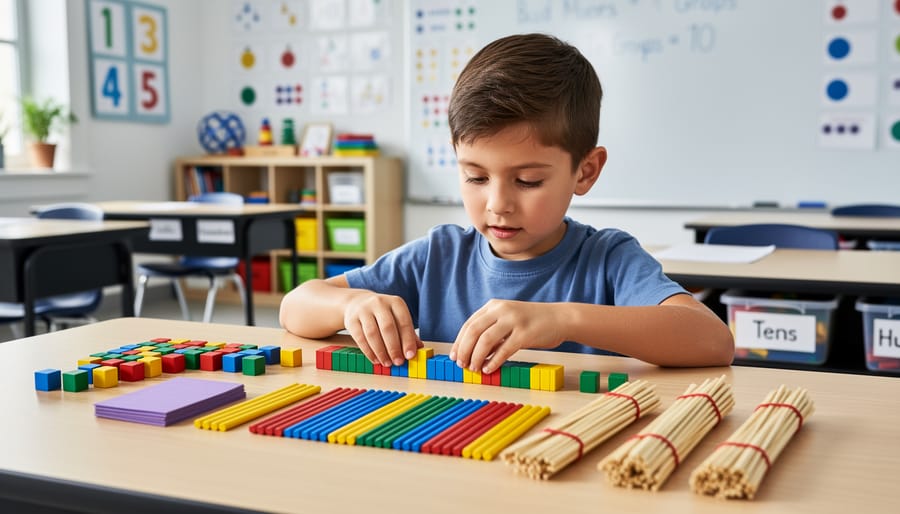
Teaching place value doesn’t require expensive specialty items. The most effective materials are those that let children physically see and manipulate groups of ten, and many of these can be found in your home or classroom right now.
Here’s what you’ll want to gather before you begin:
- Base-ten blocks or linking cubes that snap together in groups of ten
- Place value charts (printable templates work perfectly)
- Counting beads, buttons, or dried beans for grouping practice
- Bundling materials like straws, popsicle sticks, or pencils with rubber bands
- Small containers or cups for sorting ones and tens
- Blank paper and markers for drawing number representations
- Index cards for creating number cards and matching games
Don’t feel pressured to buy everything at once. Ten pencils bundled with an elastic band teach the concept just as effectively as manufactured base-ten rods. The same goes for pasta pieces, LEGO bricks, or even small toys. What matters is that children can physically group ten objects together and see how that group becomes a single unit.
For structured practice, two programs stand out. The Math Mammoth Light Blue series is strong on place value and operations, offering clear explanations and plenty of hands-on activities. If you’re teaching in Canada, Pearson Mathology practice workbooks are designed specifically for Canadian provincial curricula and align well with classroom expectations.
You’ll also want printable worksheets that include activities designed to build place value conceptual understanding, not just rote drill. These should ask students to represent numbers in multiple ways: with pictures, blocks, and numerals.
If your family enjoys digital learning, simple online place value games can reinforce concepts between hands-on sessions. But keep screens secondary to physical manipulation, especially in these early stages. Children need to feel the difference between one and ten before they can think abstractly about it.
Before You Begin: Important Preparation Steps
Before you dive into place value lessons, take time to ensure your child or student has the foundational skills in place. Rushing this concept when a learner isn’t ready can create confusion and math anxiety that lingers for years. The good news? A little preparation now makes the actual teaching dramatically easier and more successful.
Start by assessing counting fluency. Can the child confidently count to 100? Do they understand one-to-one correspondence, that each number name matches exactly one object? These basic counting skills form the bedrock of place value understanding. If counting still feels shaky, spend more time there before moving forward.
This advance practice is critical. Weeks before you start teaching place value, practice counting by tens with your students, particularly past 100. Make it fun: count by tens while bouncing a ball, during transitions between activities, or as a call-and-response game. Start from different numbers (count by tens starting from 7, starting from 23) once the basic pattern is secure. This repetition builds the mental flexibility kids need to grasp that “40” represents four groups of ten.
Watch for signs of readiness. A child who’s ready can count a pile of objects accurately, recognizes written numerals, and shows curiosity about how numbers work. If they’re still mixing up number names, reversing digits when writing, or losing track when counting, they need more foundational practice first.
Create a low-pressure environment. use scaffolding by breaking lessons into tiny steps, celebrate small wins, and never shame mistakes. Place value clicks at different rates for different learners, and that’s completely normal. Your patience and encouragement matter more than any curriculum.
Step-by-Step: How to Teach Place Value Concepts
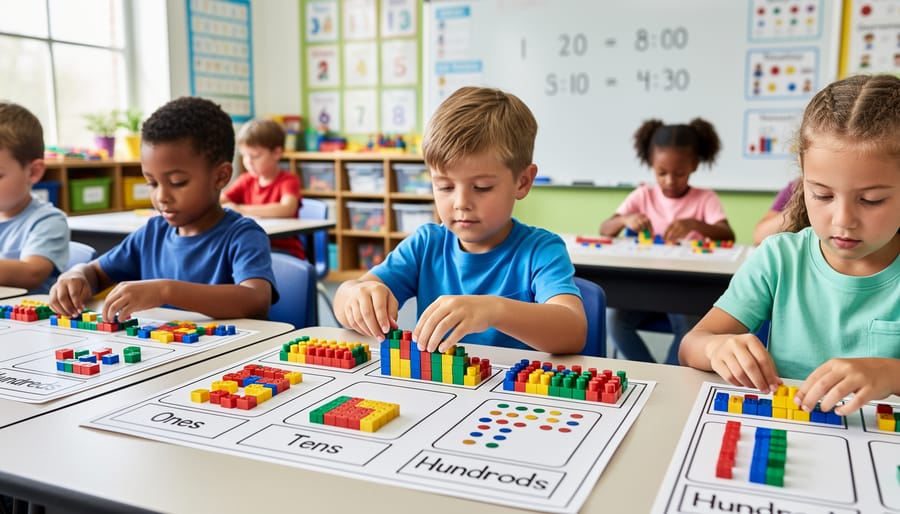
Step 1: Master Counting by Tens
Before children can grasp that the “2” in “25” means two tens, they need fluency counting by tens in isolation. Start this practice weeks before introducing place value concepts, ten, twenty, thirty, forty becomes automatic through repetition. Have students count aloud together from ten to one hundred, then push beyond: 110, 120, 130. Going past 100 is critical because it reveals the pattern continues indefinitely, not just within the first hundred numbers.
Make counting kinesthetic. Kids can clap on each decade, jump, or touch their toes, movement anchors the rhythm. Try starting from different numbers: “Let’s count by tens starting at seven, seven, seventeen, twenty-seven.” This variation builds flexibility and prevents rote memorization without understanding.
Turn practice into a game. Toss a beanbag and whoever catches it says the next number in the sequence. Use call-and-response: you say “forty,” students shout “fifty.” Songs work beautifully, set the counting sequence to a familiar tune or find videos online where music carries the pattern.
The goal isn’t speed; it’s confident, accurate counting that becomes second nature. When students can count by tens starting anywhere, forward and backward, they’re ready for the next step: understanding what those tens actually represent.
Step 2: Introduce the Concept of Grouping
Once your child can count by tens confidently, it’s time to make the leap from abstract counting to concrete understanding. This step transforms place value from a memorized pattern into something tangible they can see and touch.
Start with loose items, beans, buttons, pennies, or snap cubes work perfectly. Give your child a pile of exactly twenty items and ask them to count. Then pose the question: “Is there a faster way to organize these so we know how many we have?” Guide them to sort the items into groups of ten. Let them physically bundle or contain each group, rubber bands around sticks, cups for beans, or simply arranged rows on the table.
Here’s where the magic happens: introduce a single base-ten rod or craft stick and say, “This one stick represents the same amount as these ten loose ones. Let’s trade.” Allow your child to physically swap their ten individual items for one ten-stick. They’ll see that nothing changes in quantity, just how we represent it. Repeat with the second group of ten, reinforcing that two tens equals twenty.
The physical act of trading creates the foundational understanding that ten ones can become one ten, the same amount, different form. This concrete experience makes place value real, not just a rule to remember.
Step 3: Connect Groups to Written Numbers
Once children confidently group objects into tens and ones, it’s time to show them why we write numbers the way we do. Place a bundle of ten blocks and three individual blocks on the table, then write “23” next to them. Point to the 2 and touch the bundle, that digit represents two tens. Point to the 3 and touch the loose blocks, that digit represents three ones. The position of each digit is what gives it meaning.
Build several numbers together this way. Start with teens (14, 17) to show one ten and various ones, then move to larger numbers. Each time, physically construct the number with manipulatives first, then write the numeral beside it. Ask the child to tell you what each digit represents before you write it down.
Reverse the process too: write a number like 35 and ask the child to build it with blocks. If they grab 35 individual cubes instead of three tens and five ones, guide them back to grouping. This back-and-forth between physical representation and written symbol cements the connection between what they see and what numbers actually mean on paper, turning abstract digits into tangible quantities they’ve touched and arranged themselves.
Step 4: Practice Composing and Decomposing Numbers
Once your student can physically group objects and connect them to written numbers, it’s time to practice flexibility, showing them that numbers can be broken apart and rebuilt in multiple ways. This step builds the mental agility needed for efficient calculation later.
Start with simple two-digit numbers using base-ten blocks or bundles. Ask, “Can you show me 23?” Let them build it as 2 tens and 3 ones. Then challenge them: “Can you show me 23 a different way?” Guide them to trade one ten-stick for 10 ones, creating 1 ten and 13 ones, still 23. This reveals that the same number can take different forms.
Create fill-in-the-blank activities: “47 = ___ tens and ___ ones” or “5 tens and 8 ones = ___.” Use worksheets where students draw blocks to match written equations, then write equations to match block pictures. Make it playful: roll dice to generate numbers, then race to decompose them using manipulatives.
The goal isn’t speed, it’s genuine understanding that numbers are flexible. When a child can confidently explain why 34 equals 3 tens and 4 ones but also 2 tens and 14 ones, they’ve internalized place value as a concept, not a procedure.
Step 5: Apply Place Value to Addition and Subtraction
Once your students grasp tens and ones as distinct units, they’re ready to use that understanding for easier computation. Instead of counting individual objects for 23 + 14, show them how to think: “Two tens plus one ten equals three tens, and three ones plus four ones equals seven ones, that’s 37.” Work through several examples with manipulatives first, physically combining the tens and ones separately, then writing the equation. This approach makes the logic transparent.
For subtraction, demonstrate the same strategy: 35-12 means taking away one ten and two ones. When regrouping becomes necessary (like 32-18), use blocks to show trading one ten for ten ones, making the abstract process concrete. Practice with varied problems, always asking students to explain their thinking aloud, this reveals whether they’re truly using place value understanding or falling back on counting by ones.
Gradually phase out manipulatives as confidence builds, encouraging mental math: “You have three tens and need to subtract one ten, how many tens remain?” This foundational strategy becomes their launchpad for tackling larger numbers and more complex operations throughout elementary math.
How to Know It’s Working: Verification and Progress Checks
Real understanding shows when a child can explain their thinking, not just recite answers. If you ask, “What does the 3 in 37 mean?” and they say “three tens” or “thirty,” that’s deeper than simply reading the number correctly. True mastery means they can flexibly move between representations, showing you 42 with base-ten blocks, then writing it, then telling you it’s 4 tens and 2 ones without hesitation.
Watch for these signs your child has truly grasped place value:
- They can explain why the 2 in 25 means 20, not just 2
- They can build any two-digit number with manipulatives without counting by ones
- They solve simple addition problems by thinking in tens (like 34 + 20 = 54) rather than counting up one by one
- They notice and self-correct mistakes, like catching themselves if they write 46 when they meant 64
Ask informal this or that verification questions during everyday moments: “Would you rather have 5 tens or 30 ones?” A child who understands will quickly realize they’re the same. Try giving them a number like 58 and asking, “Can you make this number a different way?” If they can show 4 tens and 18 ones, they’re thinking flexibly about grouping.
Common stumbling blocks include reversing digits when writing (putting the ones digit first) or believing that bigger-looking numbers are always larger (thinking 9 is more than 10). If these persist, return to hands-on grouping activities before pushing ahead.
Once place value clicks, you’re ready to explore three-digit numbers, introduce regrouping in addition and subtraction, and help them see patterns in skip counting. Solid place value understanding opens the door to confident, strategic math thinking.
Making It Fun: Creative Activities That Build Place Value Skills
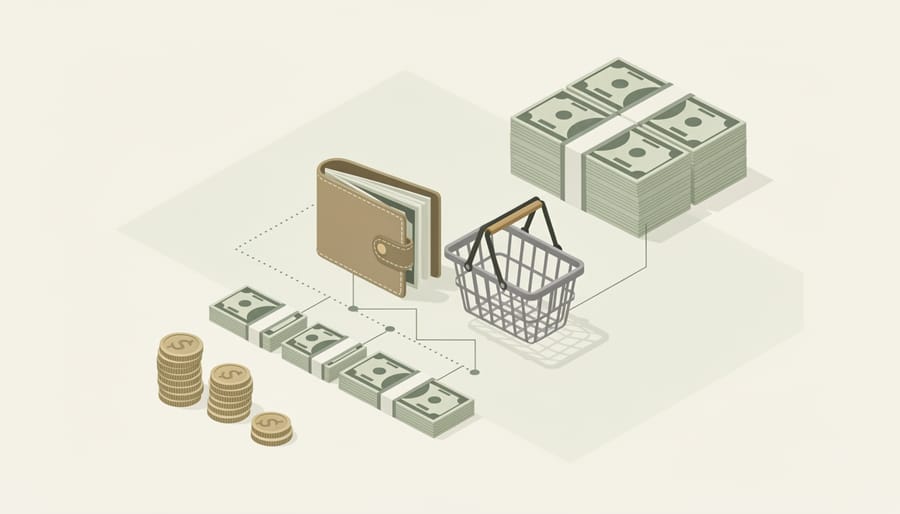
Learning place value doesn’t have to mean endless worksheets. When children explore this concept through activities they love, understanding clicks naturally, and lasts longer.
Games that make tens and ones exciting
Turn your living room into a place value arcade. Create bingo cards with numbers written in expanded form (20 + 3) and call out standard numerals (23). Kids mark matches and explain their thinking as they play. Another family favorite: the “Number Detective” game where children spy two-digit numbers around the house, on clocks, appliances, package labels, then break each number into tens and ones using household items like pasta or buttons.
Hands-on activities that stick
These creative approaches transform abstract concepts into tangible fun:
- Place Value Bingo: Players match standard numbers to expanded form, explaining each answer
- Building Numbers with LEGO: Assign ten-unit bricks and one-unit bricks different colors, then construct numbers physically
- Grocery Store Math Challenges: Compare prices, count items by tens, or estimate quantities before checkout
- Digital Coding Games: Use block-based programming that reinforces base-ten thinking through pattern recognition
Connecting place value to your child’s world
Kids grasp concepts faster when they’re relevant. Have your child calculate how many tens and ones are in their video game score. Bake cookies and group them by tens on cooling racks. Count birthday party invitations by organizing them into stacks of ten.
Learning beyond the kitchen table
ESDNL embraces the idea that math learning thrives in community settings. Organize neighborhood scavenger hunts where children collect natural objects and sort them into groups of ten. Local field trips to museums or science centers offer countless opportunities to practice counting and grouping. When children see place value operating in real contexts, ticket booth totals, exhibit attendance numbers, collection sizes, the concept stops feeling like “school math” and becomes a practical tool.
For tech-savvy families, digital manipulatives and math apps offer interactive ways to visualize regrouping and trading. The key is balancing screen time with physical manipulation, since research shows that handling concrete objects builds deeper conceptual understanding in early learners.
Common Questions About Teaching Place Value
When parents and educators encounter roadblocks, a few practical answers can restore momentum and confidence. These questions come up repeatedly, whether you’re working with a small group or supporting homework at the kitchen table.
What age should I start teaching place value?
Most children are ready to grasp basic place value concepts in kindergarten and first grade, typically around ages five to seven. If your child can count reliably to 20 and recognize numerals, they’re likely ready to begin exploring tens and ones through hands-on activities.
How long does it take for kids to understand place value?
Building genuine conceptual understanding takes weeks to months, not days. Expect to revisit the concept regularly with different activities and contexts throughout the school year, as true mastery develops gradually through repeated exposure and application.
What if my child isn’t getting it?
Step back to counting practice first, many struggles stem from insufficient fluency with counting by tens, particularly past 100. Spend a few weeks on that foundation before returning to place value grouping activities, and use more physical manipulatives to make the concept tangible rather than abstract.
Can technology help with place value instruction?
Digital tools and interactive apps can provide engaging practice, especially for visual learners, but they work best as supplements to hands-on manipulation of physical objects. Technology shines when it offers immediate feedback and adaptive challenges that match your child’s current level.
Parents often worry about supporting homework when they feel uncertain about current teaching methods. Remember that your role isn’t to be the expert teacher but to ask good questions: “Can you show me with these blocks? What does this digit tell us?” Your genuine curiosity encourages kids to explain their thinking, which deepens their understanding.
For children who struggle with abstract concepts, try connecting place value to contexts they care about, money is particularly effective since coins naturally group by tens and hundreds. Similarly, building logical thinking through a coding course can strengthen the pattern-recognition skills that underlie place value understanding, and many coding myths about difficulty or prerequisites don’t hold up in practice.
When differentiating for advanced learners, extend into larger numbers (hundreds, thousands) or introduce more complex decomposition challenges rather than rushing ahead to unrelated topics. The depth of understanding matters far more than the speed of coverage.
Teaching place value is a journey, not a destination. You won’t master it in a single afternoon, and your child won’t experience a sudden “aha” moment that solves everything. This concept builds gradually through repeated exposure, hands-on exploration, and patient guidance. Some days will feel like breakthroughs. Others will leave you wondering if anything stuck. That’s normal, and it’s okay.
What matters is showing up consistently with creativity and encouragement. Use the tools around you. Turn everyday moments into learning opportunities. Count money together at the store. Bundle craft sticks while working on a project. Make it playful, make it real, and celebrate small wins along the way.
Remember why this matters beyond the math worksheet. Strong number sense isn’t just about getting the right answer. It’s about building logical thinking skills that prepare children for a tech-driven world where problem-solving and computational thinking are essential. Place value understanding connects directly to how computers process information, how coding logic works, and how we navigate digital systems every day.
You’re not alone in this. Connect with other parents and educators in your community who share the same goals. Explore resources that extend beyond traditional math instruction, ESDNL’s programming courses offer excellent opportunities to build the logical reasoning skills that complement place value learning and set kids up for future success. Keep going. You’re doing important work.