
Charlemagne’s educational reforms were a comprehensive effort to revive learning across medieval Europe through the establishment of schools, standardized curriculum, and training of teachers in monasteries and royal courts. Around 800 CE, the Frankish emperor recognized that an illiterate empire couldn’t function effectively, so he launched what historians call the Carolingian Renaissance, a movement that preserved classical knowledge and made education accessible beyond the aristocracy for the first time in centuries.
This matters more than you might think for parents and educators today. Charlemagne’s approach tackled a problem that sounds surprisingly familiar: how do you create a quality education system when resources are scarce, teachers need training, and communities are scattered? He built a framework that prioritized teacher development, community learning centers, and a core curriculum that balanced practical skills with intellectual growth. His palace school at Aachen became a model that spread throughout his empire, creating a network of learning communities that supported both students and teachers.
What made Charlemagne’s reforms remarkable wasn’t just royal decree. He understood that lasting educational change requires investing in the people who teach, creating spaces where learning feels collaborative rather than isolating, and ensuring that education serves real community needs. These same principles drive successful educational approaches in 2026, whether we’re talking about homeschool co-ops, digital learning communities, or alternative education models.
This article explores how Charlemagne’s methods worked in practice, the key components that made his system effective, and the concrete ways these medieval insights can inspire creative solutions for modern families seeking quality education options.
What Charlemagne’s Educational Vision Meant

Charlemagne wasn’t born into a world that valued education for everyone. When he became king of the Franks in 768 and later Emperor in 800, most of Europe had spent centuries in what historians call the Dark Ages. Learning was locked away in monasteries and cathedral schools around Charlemagne accessible only to future clergy and the occasional noble child. The vast majority of people, even many nobles, couldn’t read or write.
Medieval society was divided into rigid classes. The clergy prayed and preserved what little learning survived Rome’s fall. The nobility fought and governed. Everyone else worked the land. Education wasn’t seen as something a farmer’s child needed, and it certainly wasn’t considered a right.
Charlemagne saw things differently. He believed a strong empire needed educated administrators, judges, and clergy who could actually read the laws and religious texts they were supposed to uphold. More radically, he thought learning should spread beyond monastery walls. Around 780, Charlemagne invited Alcuin of York, one of Europe’s leading scholars, to help him build an education system across his empire, which stretched from modern France through Germany to northern Italy.
What followed became known as the Carolingian Renaissance, a revival of learning and culture that lit a candle in Europe’s darkest period. Understanding a few key terms helps grasp what Charlemagne built:
- Carolingian Renaissance
- The cultural and intellectual revival that occurred under Charlemagne’s reign, marked by renewed interest in classical learning, art, and education across Western Europe.
- Palace School
- The educational institution Charlemagne established at his court where nobles, clergy, and talented students studied together under master teachers like Alcuin.
- Traditional Classes of Medieval Society
- The three-tier system dividing people into those who prayed (clergy), those who fought (nobility), and those who worked (peasants), with education typically reserved only for the first group.
- Scriptoria
- Monastery writing rooms where monks copied manuscripts by hand, preserving and spreading knowledge before the printing press existed.
For today’s parents, Charlemagne’s vision offers a powerful parallel. He recognized that quality education shouldn’t be a privilege reserved for a lucky few. Just as he worked to make learning accessible across social classes in the 8th century, modern parents seek educational opportunities that give every child the tools to succeed, regardless of background. That’s the revolutionary heart of his approach.
How Charlemagne’s Educational System Worked

Charlemagne didn’t just proclaim that education mattered and hope for the best. He built a deliberate system, step by step, to transform learning across his empire.
It started with the palace school at Aachen, his capital, around 780. Charlemagne gathered his own children, the children of nobles, and promising boys from across the kingdom under one roof. The school became a model, demonstrating what organized education could achieve when you brought students, teachers, and resources together intentionally.
To lead this effort, Charlemagne recruited the best mind he could find: Alcuin of York, a scholar from England with a reputation for brilliance in grammar, theology, and teaching. Alcuin arrived at court in 782 and immediately set to work designing a curriculum that would anchor learning throughout the empire. He structured lessons around the trivium, grammar, rhetoric, and logic, ensuring students learned to read Latin correctly, speak persuasively, and think clearly. This wasn’t abstract theory. The curriculum gave teachers a roadmap and students a consistent path forward, whether they studied in Aachen or a monastery school hundreds of miles away.
Charlemagne understood that books were the engine of this system. He established scriptoria, dedicated rooms where scribes copied classical texts, Christian writings, and educational materials by hand. These weren’t casual copy shops. Trained monks worked methodically, producing standardized texts that schools across the empire could use. The act of copying itself became a teaching tool, reinforcing literacy and preserving knowledge that might otherwise vanish.
Teacher training was the overlooked genius of Charlemagne’s approach. He didn’t assume people knew how to teach just because they could read. Alcuin trained instructors at the palace school, who then returned to their home regions to establish new schools and train others. The ripple effect was intentional: one well-prepared teacher could create five more, who could create twenty-five.
Charlemagne also issued direct orders, called capitularies, requiring monasteries and cathedrals to maintain schools. He didn’t leave education to chance or goodwill. He made it policy, backed it with resources, and followed through.
This combination, physical schools, expert leadership, standardized materials, trained teachers, and institutional support, created a system that actually worked and spread literacy beyond what medieval Europe had seen in centuries.
Core Components of the Charlemagne Education Model
Charlemagne’s schools revolved around a carefully structured curriculum that balanced intellectual development, spiritual growth, and practical competence. At the heart of this system was the trivium, three foundational subjects that every student mastered before advancing further. Grammar taught students to read and write Latin correctly, the language of scholarship and governance across the empire. Rhetoric developed their ability to speak persuasively and construct compelling arguments, essential for future leaders and clerics. Logic trained them to think critically and reason through complex problems, skills that would serve them throughout their lives.
The complete curriculum in Charlemagne’s schools covered:
- Grammar, rhetoric, and logic (the trivium) for foundational learning
- Religious texts and theology to understand Christian doctrine
- Music for church services and cultural enrichment
- Arithmetic and geometry for practical problem-solving
- Astronomy for calculating church calendars and feast days
- Practical administrative skills for running estates and writing legal documents
What made this approach revolutionary was its holistic nature. Charlemagne didn’t believe in education for education’s sake alone. His schools prepared students for real roles in society, whether as priests serving their communities, administrators managing lands, or scribes preserving knowledge. This meant students learned practical skills alongside academic subjects, connecting what they studied to how they’d use it.
Charlemagne invested heavily in teacher training, recognizing that quality instruction mattered more than fancy facilities. He recruited the best scholars from across Europe, like Alcuin of York, and tasked them with training the next generation of teachers. These master educators didn’t just pass down information; they modeled critical thinking and encouraged students to question and engage with texts rather than memorize blindly.
This framework shaped Western education for centuries and still resonates today. Modern holistic learning approaches, combining core academics with arts, critical thinking, and real-world applications, echo Charlemagne’s vision. When today’s schools emphasize STEM alongside creativity, or when programs like those at ESDNL blend coding skills with collaborative projects, they’re following the same principle: education works best when it develops the whole person for actual life, not just test scores.
How These Principles Are Used in Modern Education
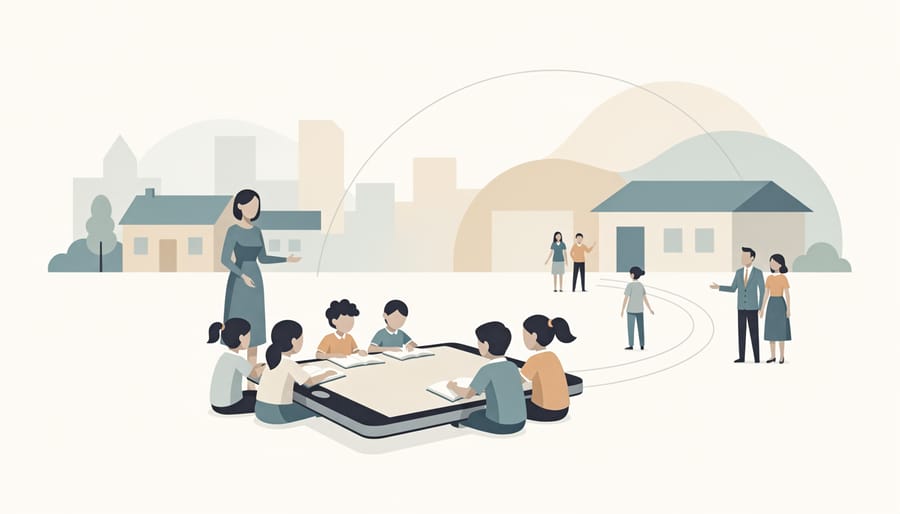
Charlemagne’s core educational principles have evolved into fundamental pillars of modern education systems worldwide. His belief that learning shouldn’t be restricted to elites mirrors today’s public education mandate and open-access learning platforms. When schools guarantee free education to every child regardless of background, they’re echoing Charlemagne’s revolutionary idea that knowledge belongs to everyone, not just the wealthy or privileged few.
Teacher quality, which Charlemagne prioritized by recruiting the best scholars of his time, remains central to effective education today. Modern schools invest heavily in teacher certification programs, ongoing professional development, and mentorship systems. Organizations focused on digital literacy and coding education apply this same principle by ensuring instructors aren’t just tech experts but skilled educators who understand child development and learning styles. When students learn to innovate through well-designed coding programs, they’re experiencing the same careful balance between content mastery and pedagogical skill that Charlemagne demanded from his teachers.
Standardized curriculum, another Charlemagne innovation, appears throughout contemporary education. School districts establish learning standards, create scope and sequence documents, and align instruction across grade levels. After-school programs teaching robotics or game design follow similar patterns, building skills progressively from basic concepts to advanced applications. This ensures children in different locations receive comparable education quality, just as Charlemagne’s scribes copied identical texts across his empire.
The community knowledge-sharing aspect thrives in modern learning environments. Parent engagement programs, community learning centers, and collaborative online platforms create networks where families support each other’s educational journeys. Coding clubs, maker spaces, and tech workshops foster the same collaborative spirit that characterized Charlemagne’s palace schools, where scholars gathered to exchange ideas and advance collective understanding. These initiatives recognize that education strengthens when families and communities participate actively rather than viewing learning as something that happens only within school walls.
What Parents and Educators Can Learn From Charlemagne
Charlemagne’s reforms offer a blueprint that feels surprisingly modern. Start by ensuring every child has a path to learning, regardless of background. That means seeking programs that remove barriers, whether financial, geographic, or technical. Just as Charlemagne brought literacy to villages across his empire, today’s parents can champion accessible tech education that reaches beyond affluent suburbs.
Invest in teacher quality above flashy tools. Charlemagne recruited the best scholars he could find, and he trained instructors across his realm. Look for programs where educators are well-prepared, passionate, and continuously learning themselves. Don’t fall for teaching myths that promise instant results from expensive software without skilled guidance.
Build learning communities around your children. Charlemagne’s palace schools thrived because they fostered collaboration and knowledge-sharing. Encourage group projects, maker spaces, and even field trips for tech that let kids learn together. Connection matters as much as curriculum.
Finally, balance structure with creativity. The trivium gave students rigorous foundations, but Charlemagne also valued problem-solving and original thought. Give your children solid fundamentals in reading, logic, and communication, then let them explore, tinker, and create. That mix, discipline plus imagination, prepares them not just for tests, but for a rapidly changing world where adaptability is everything.
How Charlemagne S Approach to Education Works
Charlemagne’s approach worked through a layered, expanding system that started at the center of power and radiated outward. He established his palace school at Aachen as the model, recruiting the best scholars available, most notably Alcuin of York, to teach not just his own children but also the sons of nobles and promising students from across the empire. This created a ripple effect: students trained at the palace school returned to their regions as teachers, administrators, and religious leaders, carrying standardized methods with them.
The mechanism resembled what is scaffolding in modern education, building support structures that let learners gradually take on more complex tasks. Charlemagne mandated that every monastery and cathedral establish schools, providing clear curriculum guidelines centered on the trivium while allowing local adaptation. He sent officials called missi dominici to inspect these schools and ensure standards were maintained.
The system also included practical quality controls: scribes copied texts using standardized Carolingian minuscule script, making materials consistent and legible across the empire. Teachers received training materials and exemplars to follow. This wasn’t top-down decree alone, it was infrastructure, training, quality checks, and community responsibility working together to transform an entire educational landscape one school at a time.
Common Questions About Charlemagne and Education
What are the traditional classes of medieval society?
Medieval society was divided into three main estates: those who prayed (clergy), those who fought (nobility), and those who worked (peasants and artisans). Before Charlemagne’s reforms, formal education was almost exclusively reserved for the clergy, leaving the vast majority of people unable to read or write.
What does Charlemagne’s empire refer to?
Charlemagne’s empire covered much of Western and Central Europe, including present-day France, Germany, Belgium, the Netherlands, Switzerland, and parts of Italy and Spain. At its peak around 800 CE, when he was crowned Emperor, this vast territory became the foundation for what would eventually develop into modern European nations.
What is the period from Charlemagne to the Revival of Learning?
This period, roughly from 800 to 1100 CE, saw the initial spark of the Carolingian Renaissance followed by gradual cultural development that eventually led to the 12th-century Renaissance. Charlemagne’s educational foundations helped preserve classical knowledge through the so-called Dark Ages, creating the conditions for later intellectual flourishing.
How did Charlemagne’s reforms influence modern schools?
His establishment of standardized curriculum, teacher training programs, and the idea that education should serve society broadly laid groundwork for public education systems. The concept that governments should invest in schools and that learning benefits everyone, not just the elite, traces directly back to his revolutionary approach.
These questions reflect concerns parents often have when exploring educational philosophies for their children. Understanding that Charlemagne democratized learning in his era helps us appreciate why accessible, well-structured education matters today. The same principles that drove a medieval emperor to invest in teachers and curriculum continue to shape quality programs, where every child gets the tools to thrive regardless of background.
Charlemagne’s vision from over twelve centuries ago continues to guide meaningful education today. His commitment to making learning accessible, building strong teacher communities, and creating spaces where knowledge could flourish wasn’t just revolutionary for the eighth century, it’s the blueprint for quality education in any era.
For parents navigating today’s educational landscape, these principles offer a clear framework for evaluation. Look for programs that prioritize skilled, passionate instructors who receive ongoing support and training. Seek communities where learning extends beyond individual achievement to collective growth, where children help one another succeed. Choose approaches that balance rigorous academics with creativity and real-world application, preparing students not just for tests but for meaningful lives.
Organizations like ESDNL embody this legacy by combining time-tested educational wisdom with modern innovation. They create accessible pathways to tech literacy, invest in quality instruction, and foster supportive communities where every child can thrive. Charlemagne understood that education transforms societies by transforming individuals. That truth remains as powerful now as it was then, guiding us toward brighter futures for our children.