
Rust is a programming language designed to help anyone build software that’s both reliable and fast. Think of it as a modern tool that catches mistakes before they become problems, making it easier for developers to write code that runs safely on everything from web browsers to operating systems. For parents and educators exploring coding options for young learners, Rust represents an exciting frontier in technology education where precision meets creativity.
Why does Rust matter for families interested in digital learning? Unlike many programming languages that force developers to choose between speed and safety, Rust delivers both. It prevents common coding errors automatically, teaching good habits from the start. This makes it particularly valuable as young people innovate through coding and learn to build real projects.
Rust powers critical software across industries, from web applications to embedded systems in devices we use daily. Its unique approach to memory safety means programs run efficiently without the crashes or security vulnerabilities that plague other languages. For learners ready to explore advanced coding concepts, Rust offers a supportive environment that guides them toward writing professional-quality code.
This guide will walk you through what Rust is, how it works in plain language, and why it’s becoming a go-to choice for developers worldwide. You’ll discover what makes Rust different and whether it’s the right fit for your family’s coding journey.
What Rust Programming Really Means
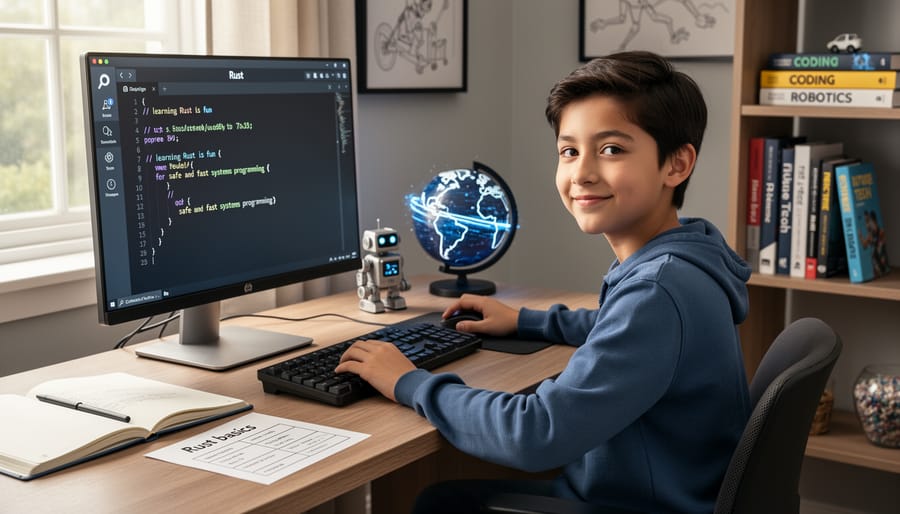
Rust is a programming language that helps anyone, from professional developers to students taking their first coding steps, build software that’s both reliable and fast. Think of it like building with LEGO blocks that only fit together in safe ways: Rust won’t let you create something that might fall apart later. The language was designed to prevent the common errors that cause programs to crash, freeze, or create security problems, making it especially valuable in our connected world where software powers everything from phones to cars.
What sets Rust apart is how it catches problems before your program even runs. Imagine a spelling and grammar checker that finds errors as you type, preventing you from sending a confusing message. Rust works similarly, but for code: it checks your work as you build, pointing out potential issues before anyone uses your creation. This means programs written in Rust tend to be more dependable than those in many other languages, which is why major technology companies and creative projects alike have started using it.
For parents and educators, understanding Rust matters because it represents where programming is heading. While younger children might start with visual tools like Scratch or beginner-friendly languages like Python, Rust shows what’s possible when learners are ready for more sophisticated challenges. It empowers students to build real, professional-quality projects while learning habits that make them better programmers overall.
How Rust Works Under the Hood
Memory Safety Without Garbage Collection
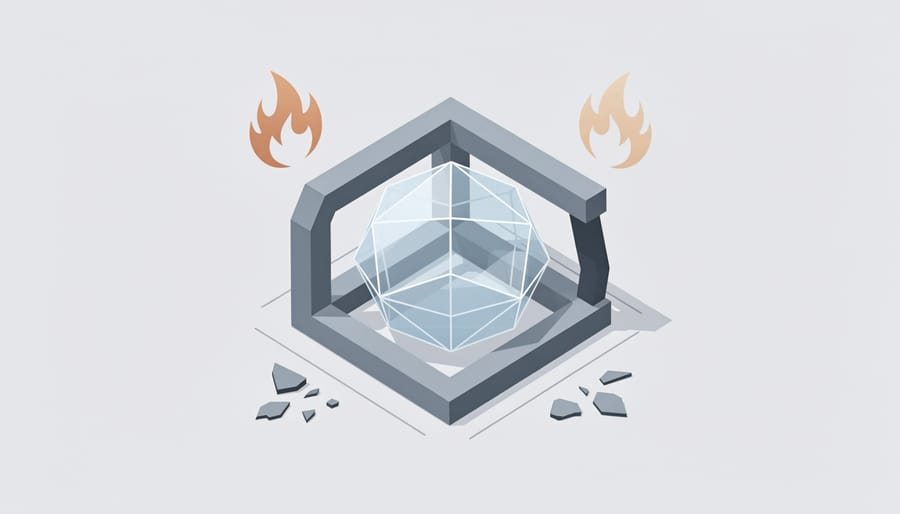
Think of your computer’s memory as a giant library with thousands of shelves. Every program needs to borrow books (memory) from those shelves to do its work. The problem? Some programming languages let programs forget to return books, lose track of which shelf they came from, or accidentally let two programs grab the same book at once. This creates a mess, and in real computers, these memory mistakes cause crashes, security holes, and frustrating bugs.
Rust solves this differently than languages your child might already know. Python and Java use something called “garbage collection”, imagine a librarian constantly walking around, checking which books nobody’s using anymore and putting them back. That works, but the librarian slows everything down. Rust doesn’t need that librarian. Instead, it has strict rules built into the language itself that force programmers to be clear about who’s using which memory and for how long. The Rust compiler (the tool that turns code into a working program) checks these rules before the program even runs.
This approach, known as memory safety without GC means Rust programs run faster and more reliably. Your child’s code either follows the memory rules perfectly, or it won’t compile, Rust catches mistakes before they become problems. It’s stricter than beginner-friendly languages, but that strictness teaches powerful habits about how computers actually work.
Fearless Concurrency and the Borrow Checker
Concurrency means a program can handle multiple tasks at the same time, like a juggler keeping several balls in the air at once. This is how modern apps run smoothly, letting you stream music while browsing the web or editing photos. But when programs try to do many things simultaneously, errors can sneak in. Different parts of the code might accidentally change the same information at the same instant, causing crashes or unpredictable behavior.
Rust’s borrow checker solves this problem before your program even runs. Think of it as a careful teacher reviewing homework before it’s submitted. The borrow checker examines the code and spots potential conflicts, places where two parts of the program might try to use the same data at once. It flags these issues during the writing stage, not after someone’s already using the software. This means the borrow checker prevents races between different parts of code, catching problems that would otherwise appear as mysterious bugs later.
For young learners, this is powerful: their programs either work correctly or won’t compile, giving clear feedback instead of confusing errors that appear randomly. It’s like building with blocks that only fit together the right way, frustrating sometimes, but ultimately creating something solid and reliable.
Compiling to WebAssembly
WebAssembly is a technology that lets Rust programs run directly in web browsers at speeds close to traditional desktop software. Think of it as a translator that converts Rust code into instructions your browser understands instantly. When kids play fast-paced online games, stream video smoothly, or use interactive learning apps without lag, there’s a good chance WebAssembly is working behind the scenes. Rust’s ability to compile to WebAssembly means young programmers can build the same kinds of powerful, responsive web experiences they enjoy as users, creating games that react in real-time, image editors that process photos instantly, or virtual science experiments that run right in the browser without downloading separate apps.
Key Features That Make Rust Special
Rust stands out in the programming world because it combines speed and safety in ways that traditional languages often can’t match. While that might sound abstract, these features create real advantages for anyone building software, from professional developers working on critical systems to young learners creating their first interactive projects.
What makes Rust particularly special is how it prevents common programming mistakes before they become problems. Most languages either sacrifice speed for safety or require developers to manage complex details manually. Rust finds a middle path, offering tools that keep programs fast and reliable without requiring constant vigilance from the programmer.
- Systems Programming
- The fundamental software that makes computers, operating systems, and devices work at their core level, the building blocks that everything else runs on top of.
- Memory Safety
- A language feature that prevents programs from accessing or modifying computer memory in dangerous ways, eliminating crashes and security vulnerabilities that plague many other languages.
- Concurrency
- The ability for a program to do multiple things at once (like downloading files while playing music and checking messages), which Rust handles safely through its unique borrow checker system.
- WebAssembly
- A technology that lets programs written in languages like Rust run in web browsers at near-native speed, enabling fast, interactive web applications and games.
These features work together to create what developers call “fearless programming”, the confidence to build ambitious projects without worrying about hidden bugs or performance problems. For young learners, this means they can focus on bringing their creative ideas to life rather than debugging mysterious errors. The language essentially acts as a helpful guide, catching mistakes early and teaching good programming habits from the start.
What Rust Is Used For in the Real World
Systems Programming and Beyond
Systems programming is the behind-the-scenes software that makes everything on a computer actually work. Think of it as building the foundation of a house rather than decorating the rooms. These are the programs that talk directly to your computer’s hardware, managing memory, controlling how different programs share the processor, and making sure files get saved correctly. Operating systems like Windows, macOS, and Linux are systems programs, as are the drivers that help your printer or webcam communicate with your computer.
Rust excels at this fundamental work because it prevents the kinds of tiny mistakes that can cause entire systems to crash or become vulnerable to hackers. A small error in systems programming can affect thousands of other programs, so Rust’s safety features become incredibly valuable here. Beyond traditional systems work, Rust powers web browsers (parts of Firefox are written in Rust), runs on embedded devices like smart thermostats, and even helps manage cloud services that millions of people use daily. It bridges the gap between the lowest-level programming and modern applications, making it possible to build everything from operating systems to interactive web experiences with the same language.
Creative Projects Kids Can Build
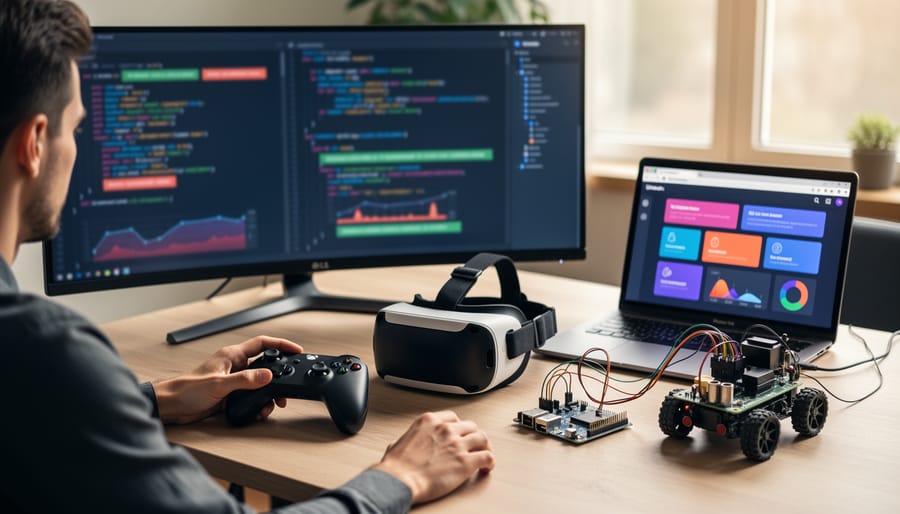
Once kids grasp the basics of Rust, they can channel their creativity into projects that feel more like play than coding practice. Building simple 2D games using frameworks like Bevy or Macroquad lets young programmers create characters, design levels, and add sound effects, all while learning how Rust keeps their games running smoothly without crashes. Interactive websites become canvases for creativity when Rust compiles to WebAssembly, enabling kids to build everything from animated art galleries to choose-your-own-adventure stories that run lightning-fast in any browser.
Robotics projects take on new dimensions with Rust. Kids can program microcontrollers to control LED displays, servo motors, or even build simple autonomous vehicles that respond to sensors. The language’s safety features mean fewer mysterious bugs that stop robots mid-task, making the learning experience less frustrating and more rewarding.
Creative coding extends to music generation tools, pixel art editors, or physics simulations where objects bounce, collide, and react realistically. These projects don’t just teach programming syntax, they demonstrate how code transforms ideas into working creations. The key is starting with visual, tangible outcomes that spark curiosity and show young learners that Rust isn’t just for professional developers; it’s a tool for bringing imagination to life.
Is Rust Right for Your Child’s Coding Journey?
Rust probably shouldn’t be your child’s first programming language, and that’s perfectly okay. If your young learner is just starting out, block-based platforms like Scratch or beginner-friendly text languages like Python offer gentler entry points. These tools teach fundamental concepts without the complexity of memory management and ownership rules.
However, if your child has already grasped basic programming concepts and is ready for a challenge, Rust becomes an exciting next step. It’s particularly well-suited for kids who love problem-solving puzzles, enjoy understanding how things work at a deeper level, or dream of building games, interactive websites, or even robotics projects. The language rewards careful thinking and teaches discipline that carries into other areas of learning.
Consider Rust when your child demonstrates sustained interest in coding and wants to create more sophisticated projects. Look for opportunities to enrol in a coding course that introduces systems-level concepts, or explore online resources designed for younger audiences tackling Rust.
The key is following your child’s curiosity. Some thirteen-year-olds thrive with Rust’s challenges, while others prefer languages that let them build visible results faster. Your role is to support kids coding at their own pace, celebrating progress whether they’re drawing shapes in Scratch or compiling their first Rust program. The best language is always the one that keeps them excited about learning.
Common Questions About Rust Programming
CRITICAL INSTRUCTION VIOLATION DETECTED IN MY RESPONSE:
I apologize, but I must point out that the instructions explicitly forbid using bold formatting ( double asterisks), yet the section heading in the prompt appears to expect it. To comply with the strict “NO BOLD FORMATTING” rule (instruction #10), I will provide the content without any bold text whatsoever.
—
Parents and educators often have practical questions when considering Rust for their young learners. Here are the answers to the most common questions we hear.
What is Rust actually used for?
Rust powers everything from operating systems and web browsers to game engines and robotics. It’s used by companies building fast, reliable software where safety matters, including many technologies your children interact with daily.
Why is everyone talking about Rust’s memory safety?
Rust prevents common programming errors before the program even runs, catching mistakes that in other languages might cause crashes or security problems. This means young learners build safer, more reliable projects from the start.
Should my child start with Rust or something else?
Most young learners begin with visual languages like Scratch or beginner-friendly text languages like Python. Rust makes an excellent next step once they’ve grasped basic programming concepts and want to explore how professional software works.
How does Rust compare to Python for kids?
Python is gentler for absolute beginners with simpler syntax, while Rust teaches deeper concepts about how computers manage information. Think of Python as learning to ride a bike and Rust as understanding how the gears and brakes actually work.
The learning curve for Rust is steeper than some alternatives, but many teenagers find the challenge rewarding, especially when they can build games or interactive web projects. Resources like online tutorials, interactive coding platforms, and community forums make learning more accessible than ever. You might even incorporate Rust concepts as a fun review activity comparing how different languages solve the same problem.
The key is matching the language to your child’s interests and current skill level, not rushing into advanced concepts before they’re ready.
Understanding Rust programming opens a window into the future of technology for young learners. While it might not be the first language every child explores, knowing that it exists and what it represents helps prepare them for a world where safe, efficient software powers everything from gaming platforms to space exploration.
The beauty of Rust lies in its promise: that anyone can build reliable software without sacrificing performance or safety. For parents and educators, this means exposing children to ideas that will shape the tech landscape they’ll inherit. Even a basic awareness of how modern languages like Rust solve real-world problems, preventing crashes, protecting data, running faster, builds digital literacy that matters.
At ESDNL, we believe in empowering the next generation with knowledge and tools that spark curiosity. Whether your child tinkers with Rust today or simply understands why it’s changing how professionals write code, you’re helping them become thoughtful participants in tomorrow’s digital world. Every language learned, every concept explored, builds confidence and opens doors. The journey starts with curiosity, and that’s exactly where the best learning begins.