
Scaffolding is a temporary structure built around buildings and construction sites to give workers safe, stable access to high or hard-to-reach areas. You’ve probably spotted these metal or wooden frameworks wrapped around homes, schools, or office towers in your neighborhood. They’re not just construction tools. They’re carefully engineered safety systems that protect workers while making repairs, renovations, or new builds possible.
For families and educators, understanding scaffolding basics matters for two reasons. First, knowing what makes a scaffold safe helps you spot potential hazards near playgrounds, school zones, or walking routes. Second, construction trades offer rewarding, well-paid career paths for young people, and early exposure to how these systems work can spark genuine interest in skilled professions.
In Canada, scaffolding safety is regulated by strict provincial standards. Every scaffold must be inspected by a qualified person before each work shift, and any structure over 10 feet high requires guardrails or fall protection systems. These rules exist because working at heights carries real risk, and proper scaffolding design saves lives.
This article explains what scaffolding is, how it works, the main types you’ll encounter, and the safety standards that govern its use. Just as we support kids coding by breaking down complex ideas into manageable steps, we’ll give you a clear, jargon-free look at scaffolding that connects construction concepts to everyday community learning.
What Scaffolding Means: A Clear Definition
Scaffolding is a temporary, field-erected structure that provides workers with a safe, stable platform to reach high places. Think of it as a specially built framework, often metal or wood, that wraps around a building or work site, creating walkways and work surfaces in the air so construction crews, painters, or repair workers can access walls, roofs, and other elevated areas without ladders.
- Scaffolding
- A temporary structure erected on-site to support workers and materials during construction, maintenance, or repair work at heights.
- Field-erected
- Built on location rather than delivered fully assembled, allowing scaffolds to be customized to fit each unique building or project.
- Working aloft
- Performing tasks at elevated heights above ground level, requiring safe access platforms and fall protection.
- Competent person
- A trained individual qualified to identify hazards and authorized to ensure scaffolds meet safety standards before each work shift.
If you’ve searched for scaffolding meaning, you might also encounter the term in education. Teachers use scaffolding to describe a teaching method where they provide support that gradually fades as students become more independent. While the construction scaffolding we’re discussing and educational scaffolding share the concept of temporary support, this article focuses on the physical structure you see wrapped around buildings in your community. Understanding construction scaffolding matters for families because these structures appear in our neighborhoods, near schools and public buildings, and they represent important career opportunities in the skilled trades for older students interested in hands-on work.
How Scaffolding Works in Real-World Settings
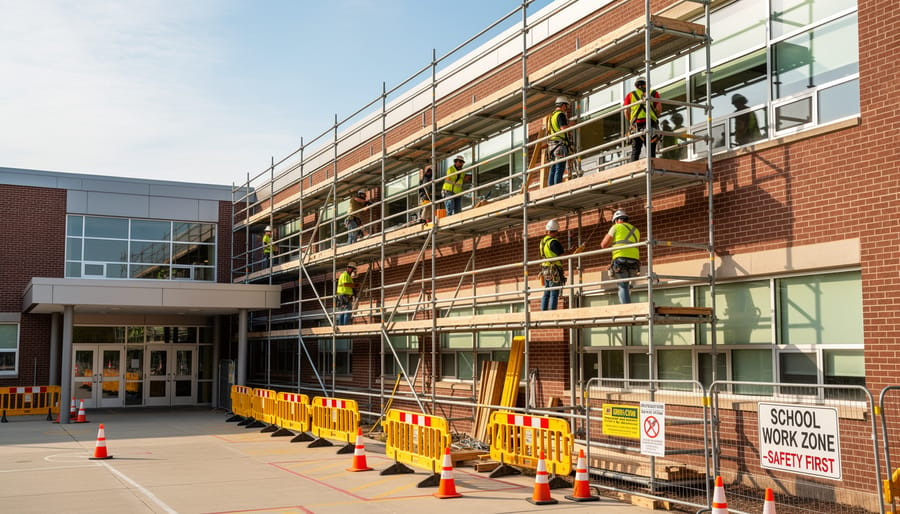
Scaffolding transforms how work gets done when the job is literally out of reach. Picture a crew repairing the roof of your child’s school or restoring the facade of a community center downtown. Without scaffolding, those projects would be dangerous, slow, or simply impossible.
In real-world settings, scaffolding creates a stable, elevated workspace. Workers assemble the structure piece by piece, starting from the ground and building upward. Metal frames interlock, platforms slot into place, and guardrails get secured along the edges. Each component must meet strict strength and width requirements to bear the weight of workers, tools, and materials.
Before anyone steps onto a scaffold, a trained professional inspects it. This competent person checks every connection, platform, and support for defects before every work shift. They look for loose fittings, damaged planks, or anything that could compromise safety. It’s a non-negotiable step that protects the people working aloft and everyone below.
Scaffolding appears wherever elevated work happens: construction sites, bridge repairs, window washing on tall buildings, even film sets. At a local school renovation, scaffolding might wrap around the entire building for weeks while crews replace bricks, paint trim, or install new windows. Parents driving past see the structure and know serious work is underway.
The industries using scaffolding range from construction and maintenance to manufacturing and event staging. Each project balances home repair costs or budget with the need for safe access. Trained workers follow safety protocols, wear proper gear, and rely on the scaffold to do its job: holding them steady while they focus on theirs.
Common Types and Components of Scaffolding
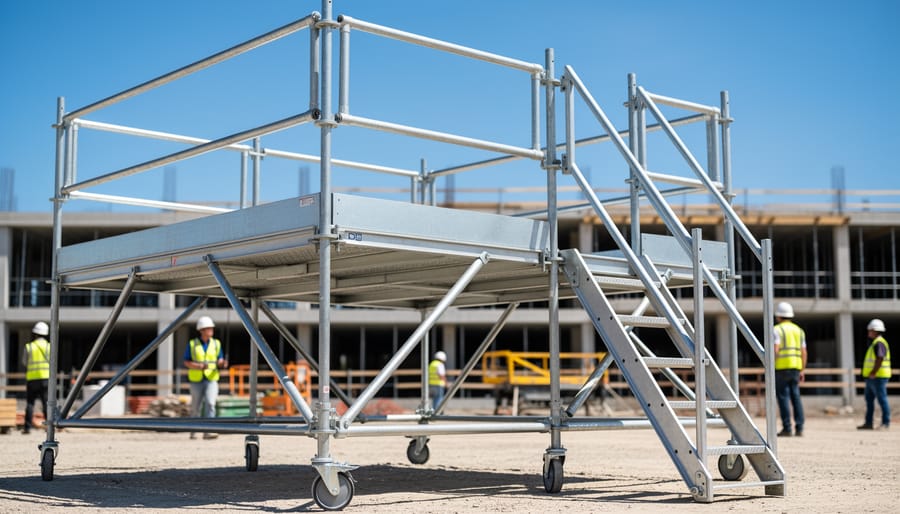
When you walk past a building under repair or look up at a crew painting your child’s school, the structures you see supporting workers fall into a few familiar categories. Understanding these types helps you recognize safe, professional setups and even sparks conversations with curious students about how construction works.
The most common scaffolding types in Canadian communities include:
- End frame scaffolds, metal frames stacked vertically with platforms between them, typically seen on building exteriors during renovations or painting projects
- Ladder jacks, portable scaffold supports that attach to ladders and hold planks, often used for smaller jobs like home siding repair
- Metal scaffolds, sturdy tube-and-coupler systems that can be configured for complex shapes, common at industrial sites and large construction zones
- Rolling scaffolds, mobile tower scaffolds with wheels, frequently used indoors for ceiling work in gyms or auditoriums
Each type shares essential components that keep workers safe. The platform is the horizontal surface where people stand and place materials, think of it as a temporary floor in the air. Guardrails run along the edges like protective fencing, preventing falls from open sides. Supports and braces hold everything stable, much like the frame of a sturdy table. Cross braces connect vertical posts diagonally, adding strength against wobbling or shifting.
You’ll spot end frame scaffolds most often because they’re versatile and quick to assemble. The rectangular frames lock together with pins, creating a grid that reaches multiple stories. Metal scaffolds using tubes and couplings offer more flexibility for curved buildings or awkward corners. Ladder jacks, while simpler, still count as scaffolds under safety rules and require the same careful setup, width standards, strength checks, and inspection before each shift.
Recognizing these structures helps families understand the skilled work happening in their neighborhoods and shows students that engineering principles apply to everyday projects, not just robots or apps.
Why Scaffolding Safety Matters in Canada
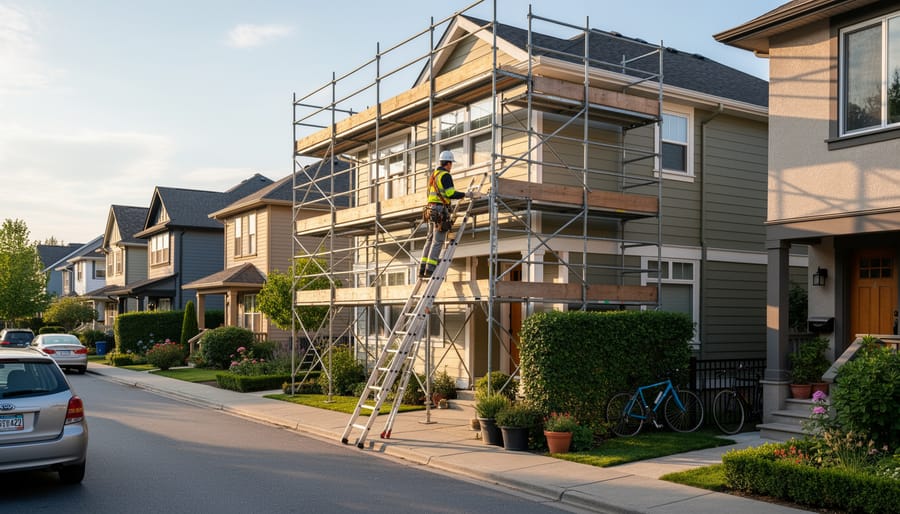
When you see scaffolding erected outside your child’s school or near a community center, it represents more than just construction in progress. In Canada, scaffolding safety is a critical aspect of workplace protection, especially in industries where people work at heights. The stakes are high: proper inspection, fall protection, and compliance with standards protect the workers who build and maintain the spaces our families use every day.
Canadian provinces maintain strict safety requirements because falls from scaffolds can result in serious injury or death. Every scaffold must be inspected by a competent person before each work shift to catch defects that could compromise stability. When platforms stand more than 10 feet above the next level, guardrails on all open sides become mandatory, or workers must use personal fall arrest systems under specific conditions. These aren’t just bureaucratic rules, they’re the difference between someone going home safely and a family receiving devastating news.
For students exploring careers in construction, engineering, or the skilled trades, understanding scaffolding safety opens a window into professional responsibility. It demonstrates how problem-solving, attention to detail, and adherence to standards protect lives. When your teenager asks about those metal structures going up downtown, you’re looking at an opportunity to discuss how workplaces balance productivity with human safety, and how technology and training work together to prevent accidents.
Communities benefit when construction projects follow safety protocols. Parents can feel confident that work near schools and public spaces meets rigorous standards, keeping both workers and passersby protected.
Key Scaffolding Safety Requirements and Standards
Who Is a Competent Person for Scaffolding?
A competent person in scaffolding isn’t just someone who’s handy with tools. It’s a formal designation for an individual trained to recognize and address hazards before workers step onto a scaffold. This person knows how to spot problems like loose connections, damaged planks, or missing guardrails that could put someone at risk.
Their most critical job? Ensuring every scaffold is inspected before each shift. That means checking the entire structure for defects, verifying fall protection is in place, and confirming it meets safety standards before anyone climbs up. Think of them as the safety gatekeeper, no inspection, no work at heights.
In Canada, competent person requirements vary by province, but the principle stays the same: someone qualified must verify the scaffold is safe before use. For families, this matters when construction happens near schools or community spaces. That thorough pre-shift inspection is what keeps workers, and everyone nearby, protected.
When Fall Protection Is Required
In Canada and across North America, fall protection becomes mandatory when a scaffold platform sits more than 10 feet above the next lower level, that’s roughly the height of a typical living room ceiling plus a bit more. At this height, a fall could cause serious injury, so safety regulations require specific protections for anyone working on that platform.
You have two main options to meet these requirements. The first and most common is installing guardrails on all open sides and ends of the platform. Picture a sturdy railing running around the edges, similar to what you’d see on a deck or balcony, but built to construction-grade standards. The second option allows workers to use a personal fall arrest system, a harness connected to a secure anchor point, though this approach only applies under certain conditions and typically when guardrails aren’t practical for the specific task.
These thresholds exist to protect the construction workers, maintenance crews, and tradespeople you might see on scaffolds around schools, community centers, or residential buildings in your neighborhood.
Canadian Standards and Guidelines
Canada safeguards workers through province-specific regulations that set clear expectations for scaffolding safety. In British Columbia, WorkSafeBC’s Part 13 guidelines cover critical details like guardrails and scaffold grounding for metal structures. Alberta’s OHS Code Part 23 addresses scaffolds and temporary work platforms with equal rigor. These standards exist to protect the people building, repairing, and maintaining the structures families rely on every day, schools, community centers, hospitals. When you see scaffolding around your neighborhood, these regulations are quietly at work, ensuring every platform is inspected, every guardrail is secure, and every worker can get home safely.
Frequently Asked Questions About Scaffolding
When your child asks about the big metal structure outside their classroom window, or you notice construction crews assembling platforms near your community center, you likely have questions about what scaffolding is and whether it’s safe. These common questions help parents and educators understand scaffolding basics and why safety matters in our neighborhoods.
What is scaffolding?
Scaffolding is a temporary field-erected structure that provides workers with a safe platform to work at heights during construction, maintenance, or repair projects. Think of it as a sturdy, adjustable platform system that allows professionals to safely reach elevated areas.
What are the main scaffolding safety requirements in Canada?
Canadian standards require a competent person to inspect scaffolds for defects before every work shift, and scaffolds must include guardrails on all open sides and ends when platforms are more than 10 feet above the ground. These requirements protect workers in communities across the country.
When is fall protection required on scaffolds?
Fall protection is required when the working platform is more than 10 feet above the next lower level. This protection typically includes guardrails on all open sides and ends, or personal fall arrest systems under specific conditions.
Who can inspect scaffolding for safety?
A competent person, someone with specialized training and knowledge of scaffolding safety, must inspect the structure before each work shift to check for defects and ensure compliance with safety standards.
Understanding these safety basics helps families recognize that construction near schools and community spaces follows strict protocols. Conversations about scaffolding can even spark interest in engineering and trades careers, showing students why field trips to construction sites or community projects matter for career exploration.
Understanding scaffolding in your community opens unexpected doors for young learners. The next time you walk past a construction site with your child, pause for a moment. Point out the scaffold, the workers, the safety measures you now recognize. Ask what keeps those platforms stable, how engineers decided where to place the supports, or what technology might monitor worker safety up there.
These structures represent real-world problem-solving in action. The engineering principles that ensure scaffolds stay secure connect directly to the math and science concepts students encounter in school. The safety monitoring systems on modern construction sites often rely on coding and digital tools, areas where our students can learn to innovate and contribute.
Careers in construction, engineering, safety inspection, and technology development all touch the scaffolding industry. By helping families understand these everyday structures, we’re preparing students to see themselves in diverse futures, whether they’re designing the next generation of fall protection systems, inspecting worksites, or coding the apps that keep workers safe.
Our communities grow stronger when we connect classroom learning to the world outside. That scaffold you see isn’t just temporary structure. It’s a gateway to conversations about careers, safety, innovation, and the many ways our students will shape tomorrow’s workplaces.