
DCS/DEC stands for Diploma of College Studies (Diplôme d’études collégiales), a unique Quebec government-issued credential that marks completion of college-level education before students move on to university or enter the workforce. If you’re exploring Canadian education options for your child or trying to decode transcript language, understanding this diploma matters because Quebec’s education system follows a different path than the rest of North America. While students in other provinces and states go from high school straight to four-year universities, Quebec students complete a CEGEP program (Collège d’enseignement général et professionnel) and earn their DCS/DEC first.
This system offers two distinct pathways. Pre-university programs typically span two years and prepare students for bachelor’s degree programs, much like the first year or two of college elsewhere. Technical programs run three years and provide hands-on career training, allowing graduates to enter the job market directly or continue to university if they choose. Both routes require a mix of program-specific courses and general education requirements, giving students a well-rounded foundation.
Whether your family is considering schools in Quebec, reviewing transfer credits, or simply curious about how this credential fits into the broader Canadian education landscape, knowing what DCS/DEC means helps you support informed decisions about your child’s academic journey.
What DCS/DEC Means: The Quebec College Diploma Defined
DCS/DEC stands for Diploma of College Studies (in English) and Diplôme d’études collégiales (in French). It’s an academic credential issued by the Quebec government that certifies training completed in either pre-university programs or technical programs at the college level. Think of it as Quebec’s version of a two-year college diploma, but with a unique twist that sets it apart from what most families encounter elsewhere in Canada.
This diploma sits between high school and university in Quebec’s educational ladder. Students typically pursue a DCS/DEC after completing Secondary V (grade 11), entering what Quebec calls CEGEP, a distinct stage that doesn’t exist in quite the same form in other provinces. The credential covers two main paths: pre-university studies that prepare students for bachelor’s programs, and technical studies that equip them with career-ready skills. Both paths include general education courses and complementary requirements that round out a student’s learning.
- DCS/DEC
- Diploma of College Studies / Diplôme d’études collégiales, the primary college credential in Quebec for both academic and career-focused programs.
- CEGEP
- A Quebec college where students earn their DCS/DEC, from the French Collège d’enseignement général et professionnel (College of General and Vocational Education).
- Pre-university program
- A two-year DCS/DEC path designed to prepare students for university admission in fields like sciences, social sciences, or arts.
- Technical program
- A three-year DCS/DEC path that provides hands-on career training in fields like nursing, information technology, or engineering technology.
Families often discover this term when a child considers studying in Quebec, when reviewing transfer credits from Canadian colleges, or when exploring distance learning options like Cégep à distance. Understanding the DCS/DEC matters because Quebec’s system operates differently from the rest of Canada, and recognizing this credential helps parents support informed choices about post-secondary pathways. The diploma is recognized across Canada and internationally, making it a legitimate stepping stone whether your child aims for university or a technical career.
How the DCS/DEC System Works in Quebec
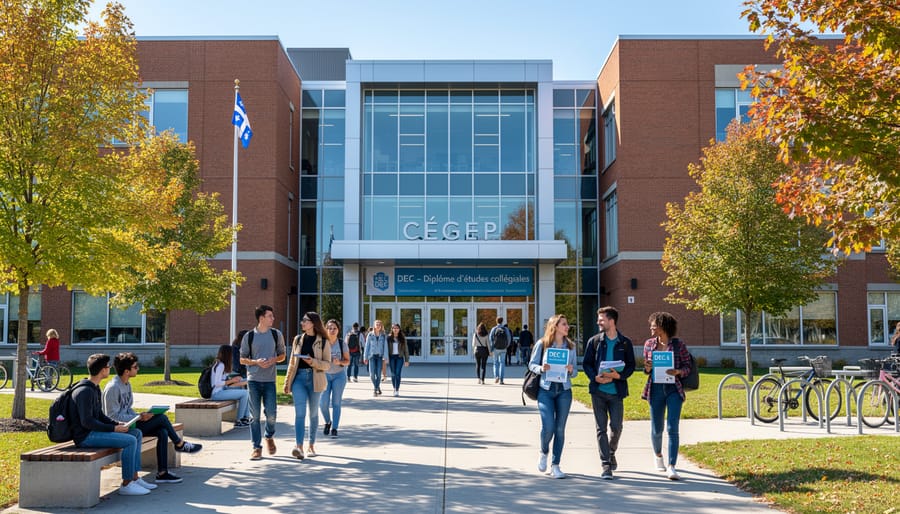
In Quebec, the path to a DCS/DEC starts right after high school. Students apply directly to a CEGEP, Collège d’enseignement général et professionnel, choosing between a pre-university track (typically two years) or a technical program (usually three years). These aren’t universities; CEGEPs occupy their own unique spot in Quebec’s education system, bridging secondary school and either university admission or direct entry into the workforce.
Once enrolled, students encounter a structured curriculum that blends program-specific courses with broader learning requirements. Every DCS/DEC candidate takes general education courses, think humanities, languages, and physical education, alongside courses specific to their chosen field. The system also mandates complementary courses, which encourage students to explore subjects outside their main concentration. A student in a science program might take an art history class; a graphic design student tackles a philosophy course. This breadth ensures graduates develop well-rounded perspectives, not just specialized skills.
Consider a typical journey: Emma finishes Grade 11 and applies to her local CEGEP for a two-year pre-university program in natural sciences. She takes biology, chemistry, and calculus courses specific to her program while also completing required English and French classes, a humanities elective, and gym credits. Each semester builds on the last, and she tracks her progress through accumulated credits. After four semesters, having passed all required courses, Emma receives her DCS/DEC, her ticket to apply for university programs across Canada.
The system accommodates diverse learning needs, too. Cégep à distance, a member of the Quebec college system subject to the same provincial regulations, offers distance learning options. Students can advance through their program by taking general education courses or mandatory complementary courses remotely, making the DCS/DEC accessible even when traditional campus attendance isn’t feasible. This flexibility supports working parents, students in remote communities, and anyone balancing education with other responsibilities.
Two Paths: Pre-University and Technical Programs

The DCS/DEC system isn’t one-size-fits-all. When students complete their high school studies in Quebec, they choose between two distinct paths that prepare them for very different futures, and both are equally valuable in helping young people discover where their talents and interests lead.
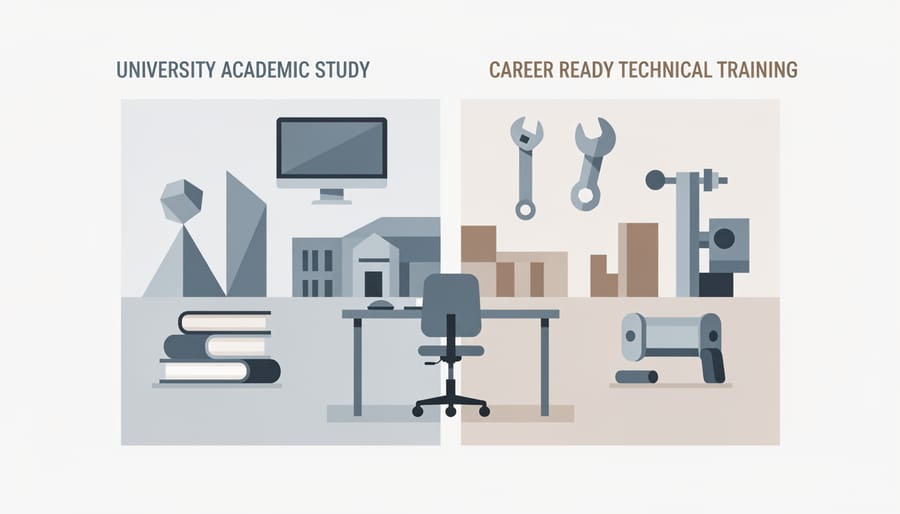
Pre-university programs function as a bridge between high school and university. These two-year programs emphasize academic depth in areas like sciences, arts, humanities, or social sciences. Students who choose this path are preparing for bachelor’s degree programs, so the curriculum focuses on critical thinking, research skills, and theoretical foundations. Your child might study calculus, literature analysis, or psychology, building the intellectual toolkit needed for university success.
Technical programson the other hand, are designed for students who want to enter the workforce with specialized, practical expertise. These three-year programs combine academic coursework with hands-on training in fields like computer programming, graphic design, nursing, electronics, or mechanical engineering. Students graduate with career-ready skills and can often start working immediately, though many also continue to university if they choose.
The key differences between these paths include:
- Duration: Pre-university programs typically take two years; technical programs run three years
- Focus: Pre-university emphasizes academic theory and university preparation; technical prioritizes applied skills and workplace readiness
- Outcomes: Pre-university leads to bachelor’s programs; technical leads to careers or specialized university programs with advanced standing
- Coursework balance: Pre-university is primarily academic; technical blends academics with lab work, internships, and industry projects
What makes this system especially smart is its flexibility. A student passionate about coding could pursue a technical DEC in computer science, graduate with real development experience, and still transfer to university later if they want to specialize further. In today’s tech-driven economy, hands-on expertise often matters as much as academic credentials, and Quebec’s system recognizes both paths as legitimate routes to success.
Where You’ll Encounter the DCS/DEC Credential
You’ll most often run across the DCS/DEC credential when your family starts mapping out post-secondary options, particularly if you’re considering colleges in Quebec or exploring study-abroad programs in Canada. Parents and educators typically encounter this term during high school planning conversations, when researching CEGEP programs, comparing provincial education systems, or evaluating whether a Quebec diploma aligns with university entrance requirements in other provinces or countries.
If your child is exploring technical training, say, they want to support coding interest through a specialized program, understanding the DCS/DEC credential helps you assess whether Quebec’s technical colleges offer the right pathway. The diploma is recognized across Canada, though admission officers and employers outside Quebec may need a brief explanation of what it represents since other provinces use different systems.
The credential also matters when evaluating transfer credits. If your teen completes part of a DCS/DEC program and later wants to continue studies elsewhere, knowing how those credits translate becomes essential. Universities and colleges across Canada generally recognize the diploma, but specific course equivalencies vary by institution and province.
International recognition is another practical consideration. The DCS/DEC is an official government-issued credential, documented in terminology guides from the Council of Ministers of Education, Canada, which gives it credibility beyond Quebec’s borders. Families considering Quebec colleges for affordability or program quality can feel confident the diploma carries weight, it’s not a local or alternative credential, but a legitimate academic qualification that opens doors to both career entry and further study.
Understanding this credential means you’re better equipped to guide your child through all available educational pathways, ensuring they find the right fit for their future.
Common Questions About DCS/DEC
Parents and educators exploring Quebec’s college system often run into the same handful of questions when DCS/DEC appears on a program page or admissions requirement. These queries reflect the natural confusion that comes with navigating a credential unique to one province, and understanding the answers helps families make confident decisions about their child’s future education path.
What does DCS/DEC actually stand for?
DCS/DEC stands for Diploma of College Studies (in English) and Diplôme d’études collégiales (in French). It’s an academic credential issued by the Quebec government that certifies training in pre-university programs and technical programs offered through the province’s CEGEP system.
Is there a difference between DCS and DEC?
No functional difference exists, DCS is simply the English abbreviation, while DEC is the French abbreviation for the exact same diploma. Both terms refer to the college-level credential awarded by Quebec institutions.
Will universities outside Quebec recognize this diploma?
Yes, the DCS/DEC is recognized across Canada and by many international universities, particularly for pre-university programs that prepare students for bachelor’s degree admission. Technical DCS/DEC programs may also provide pathways to further study or professional certification, depending on the field and institution.
Can my child complete a DCS/DEC entirely online?
Cégep à distance, a member of the Quebec college system, allows students to advance in their program by taking general education courses or mandatory complementary courses needed for their DCS/DEC through distance learning. This flexibility mirrors the same approach families use when they enrol in a course to build digital skills for their child’s future.
Understanding these fundamentals helps demystify a credential that might seem unfamiliar but represents a well-established, respected pathway in Canadian education. Quebec’s DCS/DEC system offers young learners structured preparation for both university and career-focused futures, and knowing how it works empowers families to support their children’s ambitions with clarity.
Understanding credentials like the DCS/DEC opens doors for your child, whether they’re years away from college or already exploring post-secondary options. Quebec’s diploma system might seem distant from daily life, but knowing how different pathways work empowers you to guide conversations about your child’s future with confidence. At ESDNL, we believe every family deserves clarity when navigating educational choices, and that preparation starts early, through hands-on learning experiences like tech field trips that spark curiosity about careers and possibilities. You’re not alone in this journey. Lean on your community, ask questions, and celebrate the fact that today’s learners have more pathways than ever to pursue their passions and thrive in a tech-driven world.