
Teaching English in China in 2026 requires either a bachelor’s degree plus a 120-hour TEFL certification or a valid teaching license, along with securing a Z visa through a sponsoring school. Most positions open for August hiring fill up by early spring, so planning ahead matters if you’re considering this opportunity.
For educators exploring new horizons or parents curious about international teaching paths, China continues to welcome qualified English teachers across major cities like Beijing, Shanghai, Shenzhen, and Chengdu. The application process has become more streamlined than in previous years, though the legal requirements remain strict: you’ll need a clean background check, a health certificate, and authenticated documents to work legally.
What makes this opportunity particularly appealing for teachers is the blend of competitive salaries, housing assistance, and the chance to immerse yourself in a culture with thousands of years of history. You’re not just filling a position. You’re joining classrooms where creativity meets tradition, where your lessons about English literature or conversation practice become bridges between cultures.
The variety of school settings ranges from public schools seeking licensed teachers to private language centers that welcome TEFL-certified instructors. International schools typically offer the highest salaries and familiar curricula, while training centers provide flexibility and smaller class sizes. Each path has distinct requirements and benefits worth understanding before you commit.
Whether you’re a licensed educator looking for adventure or someone passionate about language instruction exploring certification options, the Chinese market offers clear pathways. The key is understanding which route aligns with your qualifications and what the visa process actually entails.
Why China Stands Out for English Teachers Right Now
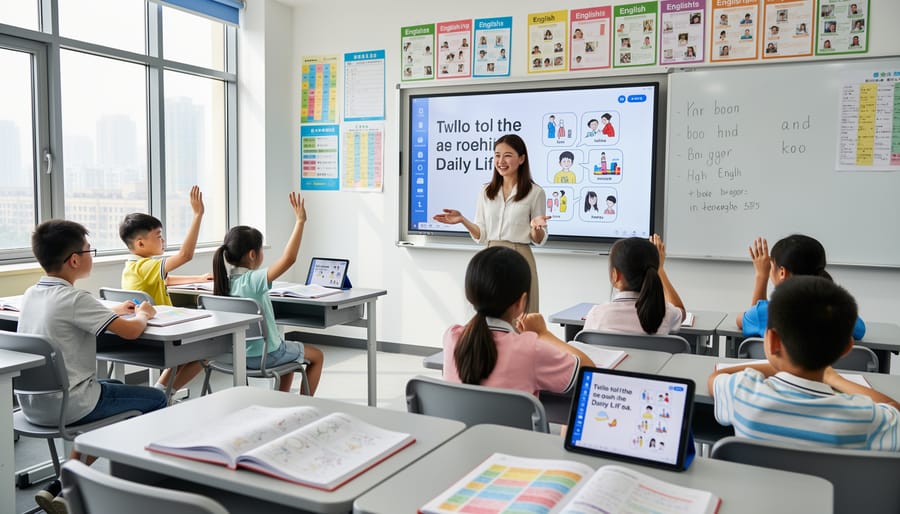
China ranks among the most rewarding destinations for English teachers in Asia right now, offering clear pathways for both licensed educators and bachelor’s holders with TEFL credentials. The country’s education sector actively recruits across multiple institution types, creating opportunities that suit different experience levels and teaching goals.
If you hold a teaching license, international and bilingual K, 12 schools often view you as a prime candidate. These institutions serve families seeking rigorous, globally-minded curricula and value educators who bring classroom expertise and curriculum knowledge. Meanwhile, if you have a bachelor’s degree in any field and a recognized 120-hour TEFL certificate, you’ll find plenty of ESL positions in private language schools, kindergartens, and English-focused classrooms. Both tracks lead to meaningful teaching roles; the distinction lies in the institution type and age group you’ll serve.
What makes China particularly appealing is the sheer variety of teaching environments. You might teach young learners in a bustling kindergarten, guide high schoolers through an international curriculum, run conversation classes at a university, or support adult learners in a private language school. Public schools, bilingual academies, and even online programs round out the landscape. This diversity means you can choose a setting that aligns with your strengths and interests rather than settling for the only available option.
The demand spans age groups, from preschoolers just beginning to speak English to university students refining their fluency. Cities like Nanjing, Shanghai, Chengdu, and Shenzhen currently list openings across these institution types, reflecting how widespread the need for qualified English teachers remains. That breadth gives you room to explore, grow, and find the teaching experience that fits your goals.
What You Actually Need to Teach English in China
The Z Visa: Your Only Legal Path

If you’re new to teaching abroad, the visa process might sound intimidating, but it’s straightforward once you understand what’s needed. The Z visa required for teaching in China is your only legal route to working as an English teacher there in 2026. No shortcuts, no tourist visas with side gigs. Schools and language centers won’t sponsor you without it, and working on any other visa puts you at serious risk.
Here’s what the Z visa process looks like. Your employer initiates it by applying for a work permit on your behalf, which requires your bachelor’s degree, 120-hour TEFL certificate, clean criminal background check, and passport from an approved country. Once that permit is approved, you’ll receive an invitation letter to apply for the Z visa at a Chinese consulate in your home country. After you arrive in China on that Z visa, your school converts it into a residence permit that lets you live and work legally for the contract period.
The timeline typically runs six to eight weeks from accepting a job offer to boarding your flight, though it varies by consulate and how quickly you gather documents. Your school will guide you through each step, they’ve done this dozens of times. As a parent or educator used to planning school years and family schedules, you’ll appreciate that the process has clear milestones and deadlines. It’s not mysterious, just methodical.
Licensed Teachers vs. TEFL-Certified Teachers
Understanding which pathway fits your background saves you time and helps you target the right opportunities from the start.
If you hold a teaching license from your home country, international and bilingual K-12 schools in China often view you as a strong candidate. These schools follow curricula like the IB, American, or British systems and serve families looking for Western-style education. Your classroom experience with standards-based instruction, lesson planning, and assessment makes you well-suited to these environments. You’ll typically teach core subjects to students aged 6-18, working alongside other licensed educators in structured academic settings.
Don’t have a teaching license? That’s perfectly fine. A bachelor’s degree in any field combined with a 120-hour TEFL certification opens the door to ESL roles at language schools and kindergartens across China. These positions focus specifically on English language instruction rather than broader curriculum delivery. You might teach conversation classes, phonics, reading, or test preparation to groups of young learners or adults. The classroom atmosphere tends to be more interactive and language-focused, with schools providing teaching materials and frameworks to guide your lessons.
Both pathways require the same foundational credentials: that bachelor’s degree, TEFL certification, clean criminal record, and a passport from an approved country to secure your Z visa. The difference lies in where you’ll teach and what you’ll be teaching. Licensed educators gravitate toward comprehensive K-12 schools, while TEFL-certified teachers thrive in language-focused classrooms. Either route gives you a legitimate, rewarding experience in China’s diverse education landscape.
Where the Jobs Are: Cities and School Types
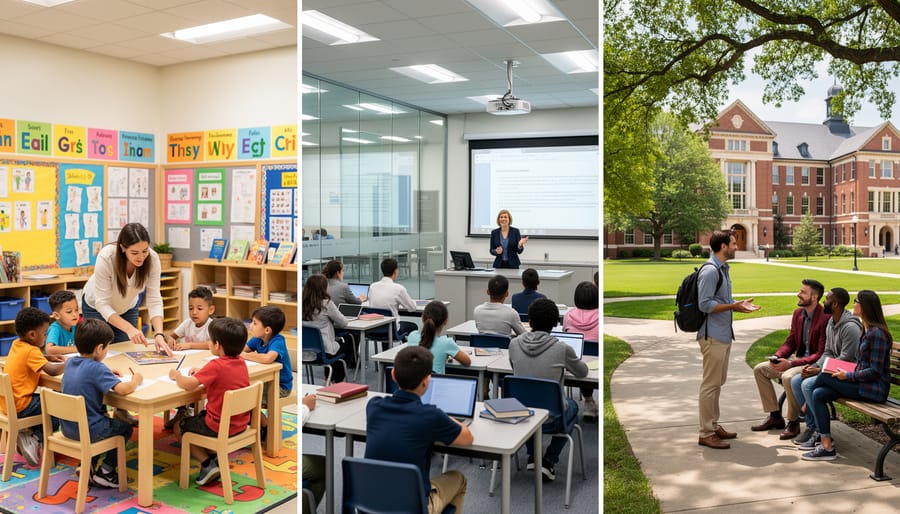
The teaching landscape in China spreads across four major hiring hubs and a surprisingly wide range of classroom settings. Right now, cities like Nanjing, Shanghai, Chengdu, and Shenzhen are actively recruiting English teachers, each offering its own flavor of urban life and cultural immersion. Shanghai brings a cosmopolitan buzz, Chengdu a laid-back foodie scene, Nanjing historical depth, and Shenzhen a tech-forward energy. You’re not limited to a single city or a single type of school, which means you can find an environment that matches your teaching style and personal interests.
The variety of teaching environments is where this opportunity really opens up. International schools typically employ licensed educators to teach K-12 curriculum in English, serving expatriate and local families who want a Western-style education. Bilingual schools blend Chinese and international curricula, appealing to families who value both systems. Private language schools focus on after-school and weekend English classes for students eager to improve conversational skills or prepare for exams. Kindergartens hire teachers to introduce English through play and early literacy. Public schools occasionally bring in foreign teachers to co-teach or lead conversation practice. Universities offer positions to teach English majors or general English courses to undergraduates. Online programs let you teach from an apartment in China to students across the country, a flexible option that grew popular in recent years and continues in 2026.
| School Type | Typical Student Age | Credential Preference | Teaching Focus |
|---|---|---|---|
| International School | 6-18 | Licensed teacher | Full curriculum in English |
| Bilingual School | 6-18 | Licensed teacher | Dual-language program |
| Language School | 6-16 | TEFL-certified | Conversation, exam prep |
| Kindergarten | 3-6 | TEFL-certified | Play-based early English |
| University | 18+ | TEFL or licensed | Academic English, majors |
| Online Program | 6-16 | TEFL-certified | Virtual conversation practice |
This range means you can choose an age group you connect with, a curriculum structure that excites you, and a city that fits your lifestyle. Whether you want the stability and resources of an international school or the dynamic energy of a private language center packed with after-school learners, China’s English teaching market has room for both licensed educators and TEFL-certified newcomers ready to make a meaningful contribution.
Timing Your Move: August 2026 Openings and Beyond
If you’re thinking about teaching English in China, the August 2026 batch of openings offers a natural entry point to start your journey. Many schools coordinate their hiring cycles around the academic year, and August positions let you begin when students return after summer break. This timing gives you a clear target date for completing your TEFL certification, gathering your documents for the Z visa, and preparing for the move.
That said, teaching opportunities in China aren’t limited to one seasonal window. International schools, bilingual programs, language centres, and kindergartens hire year-round as positions open up. Some schools need teachers in January for the spring semester, while others fill gaps mid-year or plan ahead for the next intake. Checking job boards regularly helps you spot openings that match your timeline and credentials, whether you’re a licensed educator aiming for a K, 12 school or a TEFL-certified teacher exploring ESL roles.
When you browse platforms like Teach Away or similar sites, look for listings in cities such as Nanjing, Shanghai, Chengdu, and Shenzhen. Set up email alerts if the board offers them, and revisit every few weeks to catch fresh postings. Start your application process two to three months before your ideal start date to allow time for interviews, contract review, and the Z visa paperwork. Planning ahead means you can move with confidence rather than scrambling at the last minute.
What This Means for Educators and Families Back Home
When an educator packs their bags for China, they carry more than lesson plans and textbooks. They return home with stories that transform classrooms, spark curiosity in their own students, and remind entire communities why learning stretches far beyond worksheets and walls.
International teaching experience reshapes how educators approach problem-solving, collaboration, and tech curiosity at home. Teachers who’ve navigated different education systems bring fresh perspectives on how children learn best, whether through project-based lessons, coding courses for kids, or hands-on cultural exchanges. They model what it looks like to embrace the unfamiliar, ask questions, and grow alongside students.
For families, supporting an educator’s journey abroad means investing in the entire community’s learning culture. When teachers share their experiences through assemblies, virtual exchanges, or family events, children see that education is an adventure, not a checklist. That sense of possibility matters just as much as the lessons themselves, the same reason field trips matter and fun review activities stick with students long after the bell rings.
Teaching in China isn’t just a career move. It’s a chance to bring the world back to your school, your neighbourhood, and the next generation of learners who need to see what courage and creativity look like in action.
Teaching English in China in 2026 isn’t reserved for a select few, it’s open to anyone with a bachelor’s degree, a TEFL certificate, and the willingness to step into a new classroom. Whether you’re a licensed educator ready to lead in an international school or a recent graduate exploring ESL for the first time, the path is clearer than ever. Your curiosity about different learning environments and cultures matters just as much as your credentials. Take the leap, trust the process, and know that every great teaching journey starts with a single decision. You’ve got this.